

In 2025, flooring has become one of the most scrutinised components during SFA inspections and licence renewals. For F&B operators, architects, and facility managers, the floor beneath your feet is no longer just a construction detail; it is a hygiene barrier, a compliance indicator, and a crucial safeguard for food safety.
The stakes are high. Non-compliant flooring can lead to failed inspections, licensing delays, business disruptions, food contamination risks, and even shutdown notices. With Singapore’s increasingly stringent focus on food safety standards, choosing the right flooring system has shifted from a cost-driven decision to a critical compliance priority.
This guide breaks down the latest HACCP flooring requirements, the right systems for modern food facilities, and how Asset Protection Services helps Singapore’s top F&B brands stay compliant, safe, and audit-ready.
Why Flooring Matters in HACCP & SFA Compliance
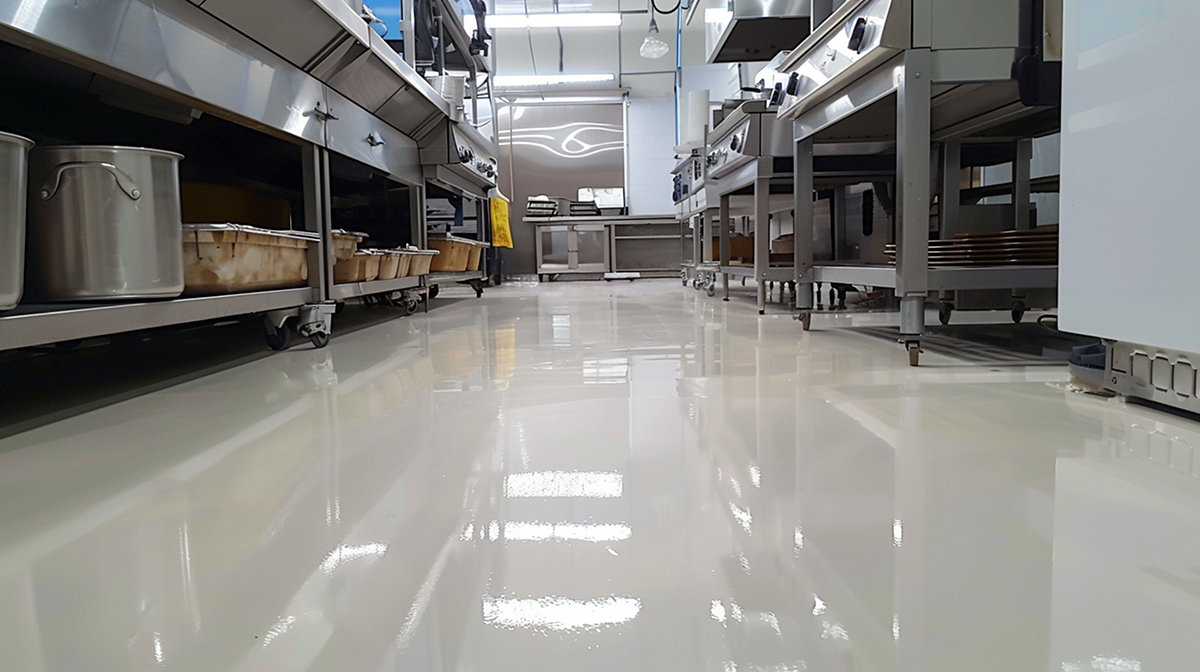
In HACCP frameworks, flooring is considered a Critical Control Point (CCP) due to its role in preventing contamination, facilitating easy sanitation, and maintaining a safe working environment. A compliant kitchen floor must prevent bacterial growth, withstand rigorous cleaning, repel oils and food by-products, and maintain slip resistance even in wet zones.
Unsealed joints, cracked surfaces, porous finishes, and water ponding are common causes of contamination in food facilities. In fact, global studies attribute around 16% of foodborne contamination to facility surfaces — floors and drains being key contributors. This is why SFA’s latest guidelines emphasise seamlessness, non-porosity, proper drainage, and the use of food-grade, non-toxic materials.
Understanding Singapore’s 2025 Flooring Requirements
Many operators still confuse ISO 22196 antibacterial testing with full HACCP International certification. While ISO standards measure microbial reduction performance, only HACCP-approved flooring meets the strict requirements for food contact zones. This distinction is critical during SFA inspections — flooring must be hygienic, seamless, resistant to chemicals and heat, and designed for intensive wash-downs without deteriorating over time.
Current SFA flooring expectations include impervious surfaces, seamless finishes, coved skirting of at least 100mm for easy sanitation, and a minimum R11 slip rating in wet areas. Kitchens must also demonstrate proper drainage gradients to avoid standing water, as ponding encourages bacterial growth and leads to inspection failures.
Why Standard Epoxy Is No Longer Enough
Traditional epoxy flooring, once commonly used in commercial kitchens, is increasingly unable to meet modern hygiene and durability demands. Standard epoxy systems may work in dry storage or office corridors, but they can soften under heat, fade under chemical exposure, and develop micro-porosity over time. When exposed to steam cleaning, boiling water, and constant oil spills, cracks and delamination often follow, creating hygiene risks and operational downtime.
Newer antimicrobial flooring systems incorporate silver-ion technology, which actively disrupts bacterial cell function. Unlike topical antibacterial coatings, these protections are integrated throughout the flooring layer, providing long-lasting defence against pathogens like E.coli, Listeria, Staphylococcus, and Salmonella. For central kitchens and high-volume food production environments, this upgrade is no longer optional — it is a food safety essential.
HACCP-Approved Flooring Systems for Food Facilities
Different F&B facilities require different flooring solutions. For pastry rooms, dry preparation zones, and bakery spaces, PU self-smoothing systems offer a seamless, hygienic surface ideal for moderate heat and chemical exposure. In hot kitchens, wok stations, central production facilities, breweries, and food manufacturing lines, heavy-duty polyurethane screeds withstand thermal shock, hot oil splashes, aggressive cleaning agents, and continuous foot and trolley traffic.
Food production plants and cloud kitchens increasingly request antimicrobial PU screeds, offering an additional layer of hygiene assurance with HACCP-certified performance. Meanwhile, epoxy self-levelling systems remain suitable for dry storage rooms, offices, and non-processing areas where budget efficiency is important but hygiene intensity is lower.
Thickness, slip rating, heat tolerance, and lifespan vary across systems, making professional specification vital. The right system can last 10–20 years, while the wrong one can fail in under three, often leading to costly repairs, operational disruption, and re-inspection delays.
Download: SFA Flooring Specification Checklist
Ensure your kitchen design meets 2025 standards from the start.
Types of HACCP-Compliant Flooring Systems
| System Type | Best For | Thickness | Key Benefits |
| Anti-Microbial PU Screed | Dry processing, packaging | 4-6mm | HACCP certified
Seamless, chemical-resistant, antimicrobial option |
| Anti-Microbial Heavy Duty PU Screed | Wet processing, cooking | 6-9mm | HACCP certified
High traffic, thermal shock resistant |
| Epoxy | Dry storage, warehouses | 0.6-1mm | Cost-effective, chemical-resistant |
These systems maintain temperature resistance from -45°C up to 120°C, covering cold rooms to hot kitchens. They provide appropriate slip resistance rated R11 for wet zones. Chemical resistance includes acids, oils, and cleaning detergents used daily. Installation timelines vary typically from 3 to 8 days, with PU systems offering greater durability and antimicrobial benefits than standard epoxy.
Real-World Success Stories in Singapore’s F&B Sector

Central Kitchen Upgrade – Streamlined Approval
A global bakery chain recently appointed Asset Protection Services to upgrade flooring across its Singapore central kitchen. The challenge was significant: strict HACCP requirements, tight deadlines, and zero tolerance for operational disruption. We installed an antimicrobial PU screed with integrated coved skirting and ensured proper drainage gradients across production zones. SFA approved the facility on the first inspection, and the client reported easier sanitation routines and zero flooring-related issues since launch.
Cold Room Durability – Designed for Thermal Stress
A regional food manufacturer faced cracking and delamination issues in its freezer rooms due to extreme temperature swings and constant forklift movement. Our team replaced the previous failing floor with a thermal-shock-resistant PU system engineered for -18°C environments. The result was a seamless, abrasion-resistant surface that maintains integrity despite harsh cold storage cycles — ultimately improving hygiene control and eliminating recurring repair costs.
Cloud Kitchen – Fast-Track Project Delivery
A multi-unit cloud kitchen operator needed HACCP-compliant flooring across multiple pods, with tight launch timelines. We completed phased installation over five days, working evenings and weekends to minimise disruption to tenant access. The operator benefited from rapid commissioning, smooth SFA submission, and a hygienic foundation for high-volume food delivery operations.
Mistakes That Lead to Compliance Issues
One of the most common mistakes is choosing flooring purely based on cost. Low-grade coatings and tile installations may appear attractive initially, but they typically deteriorate rapidly, leading to hygiene failures and expensive rectification. Another frequent oversight is ignoring thermal resistance in hot kitchens and food processing areas, which results in cracking and moisture ingress.
Poor drainage design is also a significant issue; inadequate floor slopes cause water ponding, foul odours, and bacterial harbourage. Similarly, selecting the wrong slip resistance grade increases workplace injury risks, costing time and money. Finally, DIY installation or hiring non-specialist contractors often leads to surface preparation failures, the most common cause of peeling and delamination.
Investment, ROI & Why It Pays Off
Kitchen flooring should be viewed as a long-term asset, not a quick renovation line-item. Depending on size and system selection, costs for a compliant installation across small restaurants to large central kitchens. While this is a meaningful investment, the return is clear: extended lifespan, reduced cleaning labour, fewer injury claims, improved inspection outcomes, and avoidance of shutdown-related losses.
With proper care, high-quality PU flooring systems can last well over a decade, while budget epoxy coatings may require replacement every few years, often costing more in the long run once downtime and rework are factored in.
Installation & Downtime Considerations
A structured installation process ensures quality and compliance. Surface preparation typically takes one to two days, followed by two to three days of system application and curing. For operational kitchens, phased scheduling and after-hours programmes minimise disruption. Rapid-cure formulations are also available for urgent upgrades and reinstatement works.
A typical installation process includes:
- Surface preparation: 1-2 days
- Flooring application: 2-3 days
- Curing: 2-3 days
Selecting the Right Flooring Partner
Food-grade flooring requires more than just technical product knowledge; it requires a deep understanding of SFA requirements, HACCP protocols, and real-world F&B operational needs. Asset Protection Services brings certified applicator status under leading brands such as Ardex, Laticrete, Mapei, Nippon and Sika along with a proven portfolio of central kitchens, manufacturing plants, and cloud kitchens across Singapore.
Critical qualifications for a HACCP flooring contractor include:
- Authorisation as a certified applicator for recognised brands such as Ardex, Laticrete, Mapei, Nippon and Sika
- Proven expertise in HACCP standards and Singapore Food Agency requirements.
- Portfolio of completed SFA-approved F&B projects.
- Robust warranty and after-sales support.
- Strict surface preparation and hygiene protocols.
Our process includes substrate testing, moisture evaluation, specification guidance, and warranty support. We also provide after-installation maintenance advice to ensure long-term performance and sustained compliance.
Maintaining Hygiene & Compliance Over Time
To preserve HACCP certification and prevent degradation, daily cleaning with food-safe detergents, periodic sanitation checks, and scheduled maintenance are essential. Operators should monitor for cracks, loss of anti-slip texture, or ponding water, and act promptly to resolve any issues before they compromise hygiene or audit readiness.
Your Trusted HACCP Flooring Specialist in Singapore
With rising compliance standards and increasing operational complexity, the flooring beneath your kitchen is a critical infrastructure component. Asset Protection Services is Singapore’s trusted HACCP-compliant flooring specialist for the food and beverage sector, delivering precision-engineered solutions that meet the most demanding industrial and regulatory requirements. Their dedicated expertise ensures your flooring supports your food safety program, operational efficiency, and business continuity.
If you are planning a new central kitchen, upgrading your facility, or preparing for licence renewal, our team can support you from specification to installation and ongoing care.
Get Your Free SFA Flooring Compliance Assessment
- Site evaluation
- Compliance checklist
- Flooring system recommendation
- No-obligation consultation


