

In the world of electronics manufacturing and data management, a single static discharge can cost millions. From semiconductor fabs to data centres, Electrostatic Discharge (ESD) remains a silent threat, invisible, instantaneous, and often irreparable. Yet, despite the risks, one of the most common oversights in facility planning lies quite literally underfoot: the wrong flooring choice.
Many facility owners assume that “any epoxy floor” provides enough protection against static buildup. Unfortunately, this misconception has led to costly failures across electronics and cleanroom environments. The truth is clear — not all epoxy floors are ESD-safe, and only certified ESD flooring systems can ensure compliance, safety, and long-term operational reliability.
In this guide, we’ll explain the critical differences between ESD flooring and regular epoxy, the risks of non-compliance, and how to make the right decision for your cleanroom or electronics environment.
1. The Invisible Enemy: Understanding ESD and Its Impact
Electrostatic discharge occurs when an electrical charge transfers between two objects with different electrical potentials, often triggered by something as simple as walking across a floor or handling a circuit board. While humans may feel a discharge at around 3,000 volts, sensitive microchips and electronic components can be damaged by as little as 100 volts.
How costly is ESD damage?
- The ESD Association estimates global losses exceed US$5 billion annually due to ESD-related product defects.
- In semiconductor and PCB assembly lines, even one defective wafer can mean thousands of dollars in losses.
- Beyond product failures, ESD events can corrupt data, disrupt operations, or cause downtime in data centres and server rooms.
For environments handling high-value electronics, ESD control is not optional; it’s a critical safety and quality measure.
2. Regular Epoxy Flooring: Durable but Not Static-Safe
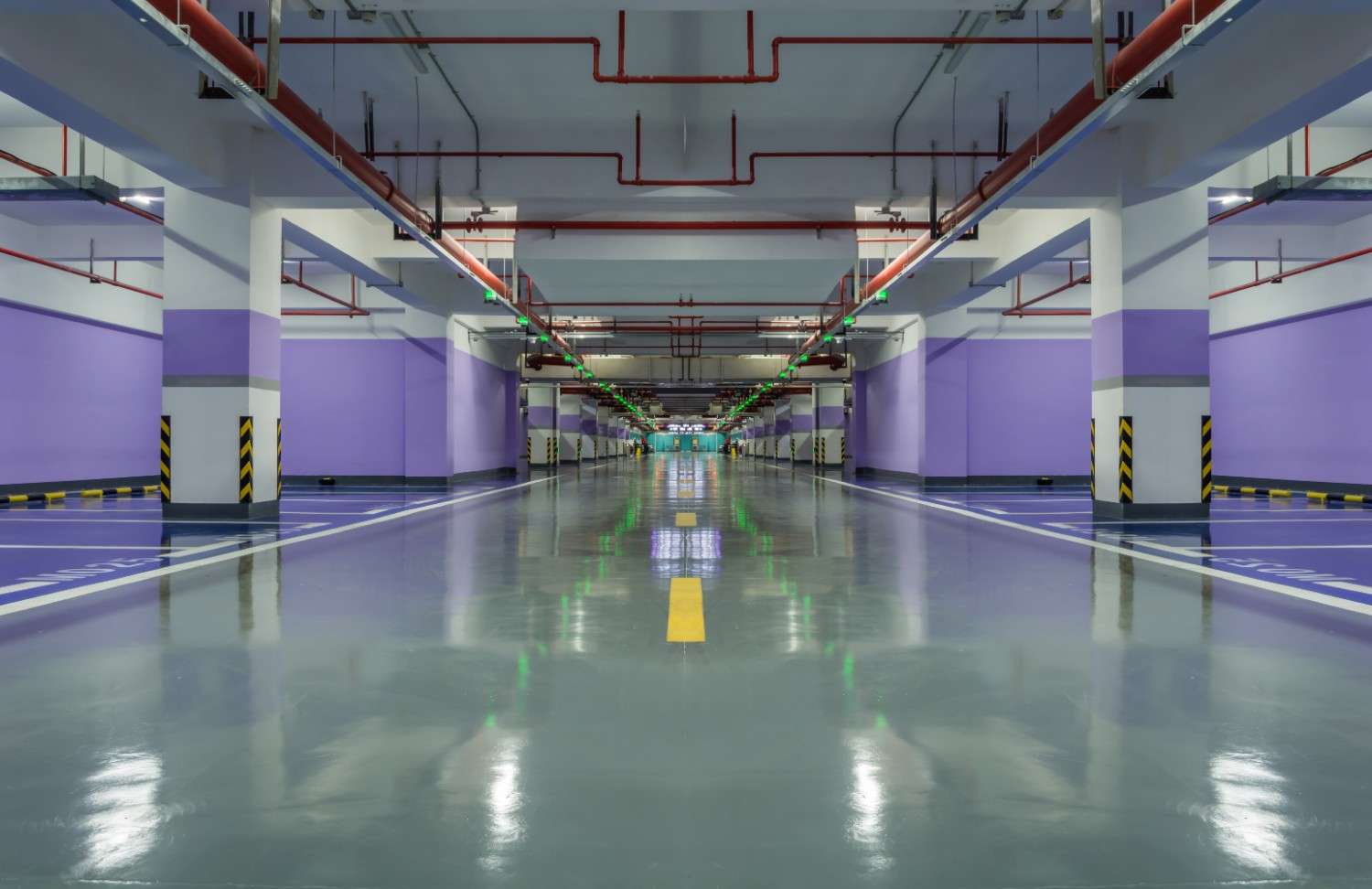
Epoxy flooring has become the go-to solution for industrial and commercial facilities due to its durability, chemical resistance, and seamless finish. It’s widely used in factories, car parks, warehouses, and even commercial kitchens. However, standard epoxy systems are designed primarily for mechanical and chemical performance, not for controlling static electricity.
Key Characteristics of Regular Epoxy Flooring
- Surface resistance: Typically exceeds 1×10¹² ohms, meaning it’s an electrical insulator.
- No grounding system: Standard epoxy floors are not connected to a conductive ground path.
- Purpose: Ideal for chemical-resistant flooring, high-traffic areas, or aesthetic applications, but not for electronics handling.
This means regular epoxy may actually accumulate static charge, increasing the risk of ESD events rather than preventing them.
3. What Makes ESD Flooring Different
ESD flooring, also known as anti-static flooring, is engineered to control the flow of static electricity safely and consistently. Unlike regular epoxy, ESD floors are formulated with conductive materials such as carbon fibers or conductive aggregates that create a continuous path for electrical charge to dissipate harmlessly to ground.
How ESD Flooring Works
- Conductive epoxy layers contain carbon or metal particles that allow controlled electrical resistance.
- Copper grounding strips or grounding points are installed beneath the floor coating.
- The system connects to the facility’s electrical ground, ensuring static discharge flows safely away from sensitive components.
Resistance Ranges Defined
According to ANSI/ESD S7.1 and IEC 61340-4-1 standards:
| Flooring Type | Resistance Range (ohms) | Typical Use Case |
| Conductive | 1×10⁴ to 1×10⁶ Ω | Cleanrooms, semiconductor fabs |
| Static-dissipative | 1×10⁶ to 1×10⁹ Ω | PCB assembly lines, data centers |
| Insulative (regular epoxy) | >1×10¹² Ω | General industrial, non-electronics areas |
A properly designed ESD flooring system ensures charges are dissipated slowly and safely, preventing sudden discharges that could damage sensitive electronics.
- Technical Standards and Testing Requirements
When choosing ESD flooring, compliance is not just about material — it’s about system certification, testing, and maintenance.
Common ESD Testing Standards
- ANSI/ESD S7.1 – Measures floor resistance to ground.
- ANSI/ESD STM97.1 – Evaluates the resistance of flooring and footwear systems.
- ANSI/ESD STM97.2 – Measures body voltage generation while walking.
- IEC 61340-4-1 – International standard for evaluating electrostatic properties.
Verification and Maintenance
To remain compliant, ESD flooring should be:
- Tested annually with a surface resistance meter.
- Maintained using ESD-safe cleaning solutions (ordinary detergents may degrade conductivity).
- Connected to dedicated grounding points verified by a licensed electrician.
5. Common Misconceptions About ESD Flooring
Myth 1: “All epoxy floors are anti-static.”
False. Only floors with conductive fillers and grounding systems can dissipate static charge. Regular epoxy, no matter how glossy, remains an insulator.
Myth 2: “ESD flooring is just a marketing gimmick.”
Not at all. ESD flooring is engineered to meet international standards — and often required by ISO 14644 (Cleanroom Classification) and ANSI/ESD S20.20 compliance audits.
Myth 3: “We can just use ESD mats or wrist straps.”
Temporary solutions like mats or straps provide localized protection but do not replace a grounded, continuous flooring system that covers the entire workspace.
Myth 4: “ESD floors cost too much.”
While initial costs are higher, the return on investment is significant. Avoiding even a single ESD-related product failure or data loss event can offset the cost of installation many times over.
6. Choosing the Right Flooring for Each Environment

Different electronics environments have different ESD and performance needs. Here’s how to match flooring types to your specific application.
a. Cleanrooms (Semiconductor, Pharmaceutical, Aerospace)
- Recommended flooring: Conductive epoxy flooring or conductive vinyl.
- Resistance range: 1×10⁴ to 1×10⁶ Ω.
- Key requirements: Seamless, easy to sanitise, compatible with cleanroom protocols.
- Example: A semiconductor fab in Woodlands achieved ISO Class 5 cleanroom certification after upgrading to Asset Protection Services’ clean room epoxy flooring with integrated grounding.
b. PCB Assembly and Electronics Manufacturing
- Recommended flooring: Static-dissipative epoxy.
- Resistance range: 1×10⁶ to 1×10⁹ Ω.
- Key requirements: Balance between conductivity and operator comfort.
c. Data Centres and Server Rooms
- Recommended flooring: Static-dissipative epoxy or conductive tiles.
- Resistance range: 1×10⁶ to 1×10⁹ Ω.
- Key requirements: Protection against static buildup near rack systems, high load-bearing strength, and chemical resistance.
- Example: A major Singapore data center partnered with Asset Protection Services to install a data center floor system rated for both ESD control and flat floor application in Singapore compliance.
d. R&D and Testing Labs
- Recommended flooring: Static-dissipative epoxy with chemical-resistant topcoat.
- Resistance range: 1×10⁶ to 1×10⁹ Ω.
- Key requirements: Safe for sensitive instrumentation and resistant to chemical spills from experiments.
7. Engineering Beyond ESD: Additional Benefits of Conductive Epoxy Systems
Beyond static control, ESD flooring systems installed by Asset Protection Services offer:
- Seamless flooring design for hygienic, easy-to-clean surfaces.
- Chemical resistant flooring suitable for solvents, acids, and cleaning agents.
- Flat floor application in Singapore for high-precision equipment alignment.
- Customizable finishes (matte, semi-gloss, or high gloss) to meet cleanroom standards.
- Durability and load-bearing performance for heavy machinery and server racks.
Every system is installed by a trained epoxy specialist and verified by certified technicians to ensure compliance to the standards.
8. Quantifying the Risk: The Cost of the Wrong Choice
The cost of using the wrong flooring goes far beyond repair and replacement.
| Risk Type | Impact | Estimated Cost |
| Product Damage | Microchip, PCB, or component failure | $10,000–$100,000 per incident |
| Production Downtime | Equipment recalibration, halted assembly lines | $50,000+/day |
| Data Loss | Server damage or disruption | Priceless |
| Non-Compliance | Failed audits, lost certifications | Potential loss of contracts |
| Safety Risks | Static sparks in solvent-handling areas | Fire and explosion hazard |
In short, regular epoxy flooring may save a few dollars upfront, but risk millions in the long run.
9. Implementation: How to Choose and Install the Right System
When selecting an ESD flooring contractor, look for expertise, materials, and testing capabilities, not just product supply.
Checklist for ESD Flooring Implementation
- Site assessment of environmental and operational factors
- Material selection (conductive vs dissipative)
- Proper grounding and earthing system design
- Compliance with international standards (ANSI/ESD, IEC)
- Post-installation surface resistance testing
- Documentation for audit and compliance verification
Asset Protection Services provides end-to-end solutions, from consultation to testing and long-term maintenance, ensuring that every floor performs as specified.
10. Why Choose Asset Protection Services
As one of Singapore’s trusted epoxy applicators, Asset Protection Services (APS) brings deep experience in semiconductor, cleanroom, and data centre flooring projects. Our team specialises in ESD flooring and anti-static flooring systems designed for mission-critical environments.
What Sets APS Apart
- Proven track record with leading semiconductor and electronics manufacturers in Singapore.
- Certified installation teams trained in conductive and dissipative systems.
- Comprehensive testing and certification using calibrated resistance meters.
- Aftercare programs to maintain ESD compliance over time.
Whether you need a new cleanroom build or are upgrading your server room APS ensures that your environment meets the strictest ESD and safety standards.
11. Making the Smart Investment
Choosing the right flooring is not merely an operational decision, it’s a strategic investment in quality, safety, and uptime. ESD flooring mitigates risks that could otherwise cripple a facility, protecting both products and reputation.
In Singapore’s fast-growing electronics sector — from chip manufacturing to high-density data centres, ESD flooring is becoming a baseline requirement, not an optional upgrade. The question isn’t whether you can afford to install it, but whether you can afford not to.
12. Take the Next Step: Get a Free ESD Assessment
If your facility handles electronics, semiconductors, or sensitive data, don’t leave your floor to chance.
Request a Free ESD Flooring Assessment — Our engineers will evaluate your environment and recommend the optimal conductive or dissipative system.
Partner with Singapore’s ESD Flooring Specialist — Protect your operations from invisible threats with Asset Protection Services.
Contact Asset Protection Services today to future-proof your facility with certified ESD flooring solutions that deliver both protection and performance.


