
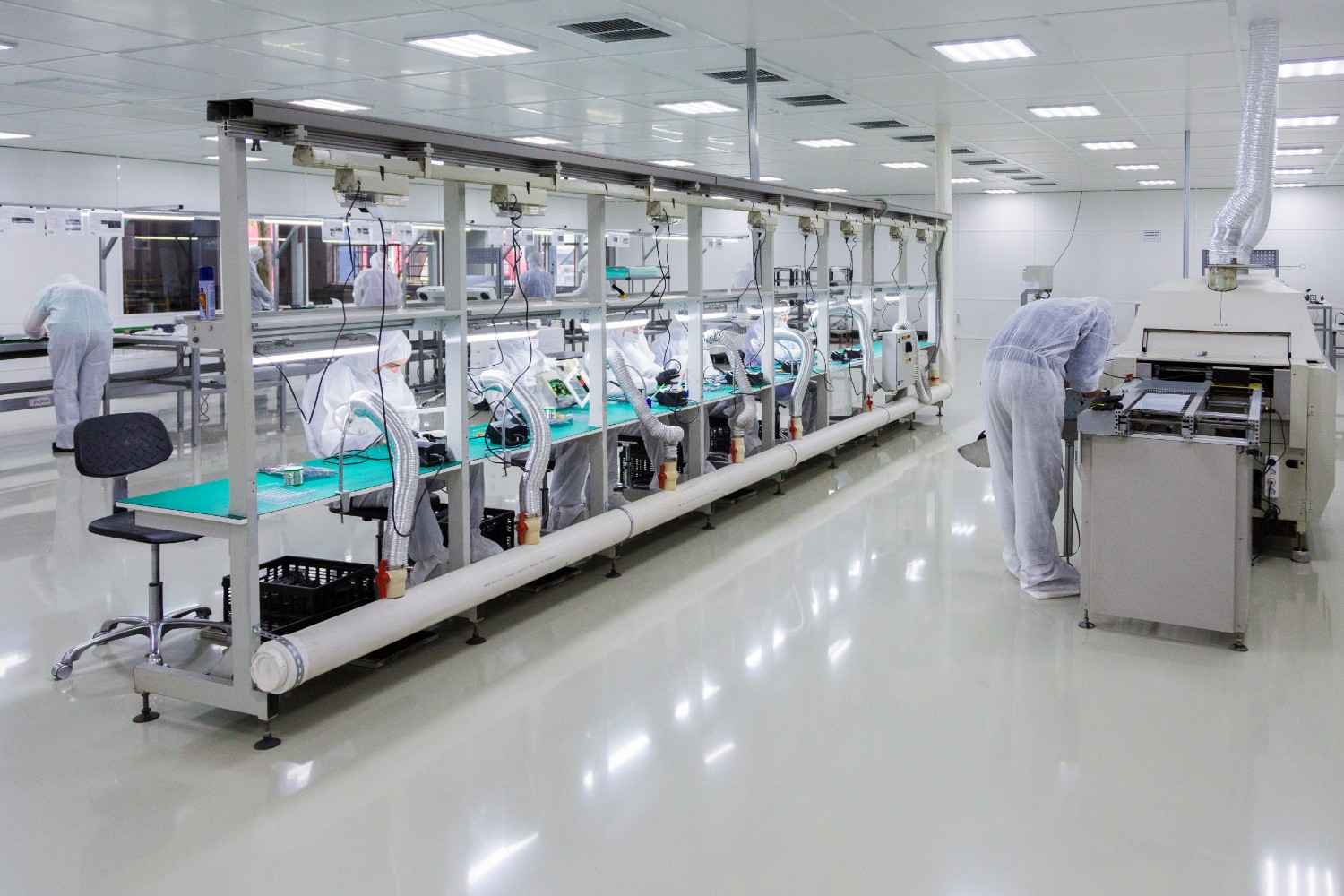
Introduction: Why Clean Room Flooring Matters in Singapore’s Pharma & Biotech Sector
Singapore’s pharmaceutical and biotechnology industries are among the most advanced in Asia, driven by world-class manufacturing facilities, stringent quality control systems, and strict adherence to global GMP standards. As manufacturers expand into biologics, sterile injectables, cell therapy, and high-tech diagnostics, the demand for robust clean room infrastructure has grown significantly.
Among the most critical yet often overlooked components of clean room design is flooring. While walls, HVAC systems, and HEPA filtration often receive more attention, the floor plays a central role in:
- Particle control
- Electromagnetic safety
- Contamination prevention
- Compliance with ISO 14644 clean room standards
- Ensuring equipment safety and operator hygiene
In a clean room, contamination can arise from anywhere, and floors are one of the largest surfaces within the controlled environment. Poor-quality flooring can generate particles, crack under chemical exposure, or interfere with the environmental control system, risking non-compliance during audits by the Health Sciences Authority (HSA) or other regulators.
This article explains how Singapore facilities can meet the required standards for clean room flooring, why clean room epoxy flooring is preferred, how ESD flooring supports sensitive operations, and finally, how to clean anti-static floors without damaging the system.
2. Clean Room Flooring Requirements Under Singapore Standards
Singapore aligns closely with global clean room standards, especially those set by the Pharmaceutical Inspection Co-operation Scheme (PIC/S), ISO 14644, and WHO GMP guidelines. In addition, Singapore has its own locally referenced standards, such as SS 632 for resin flooring and SS 553 for ESD control.
2.1 PIC/S GMP Requirements
PIC/S GMP guidelines — adopted by Singapore’s HSA — specify that clean room surfaces, including flooring, must be:
- Smooth and crack-free
- Non-porous
- Seamless or with minimal joints
- Easy to clean and disinfect
- Resistant to chemicals used in sanitation
- Designed to prevent the accumulation of particulate matter
Any flooring system that fails the cleanability or disinfectant-resistance test is considered a contamination risk.
2.2 ISO 14644-4: Design & Construction Requirements
ISO 14644-4 provides further detail on flooring for controlled environments:
- Flooring should not generate particles (no powdering, flaking, or chipping).
- The surface must withstand repeated cleaning cycles with detergents and disinfectants.
- It must be compatible with wheeled equipment, heavy machinery, and foot traffic.
- Materials should not support microbial growth.
- Flooring must be chemically stable and emit extremely low VOCs.
Epoxy and PU-resin flooring systems are among the few that can consistently meet these requirements.
2.3 Singapore Standard SS 632 (Resin-Based Industrial Flooring)
SS 632 is crucial because it specifies quality benchmarks for resin flooring systems used in industrial environments, including clean rooms. It requires:
- Minimum compressive and flexural strength
- Specified abrasion resistance
- Defined chemical resistance criteria
- Adhesion strength to substrate
- Slip resistance classifications
- Environmental compliance (VOC levels, non-toxicity)
Clean room epoxy flooring that meets SS 632 is more likely to pass stringent GMP inspections.
3. Why Clean Room Epoxy Flooring Is the Industry Standard
The most widely used flooring in Singaporean pharmaceutical and biotech clean rooms is epoxy resin, due to its performance, durability, and compatibility with regulatory standards.
Here’s why clean room epoxy flooring is preferred:
3.1 Seamless and Non-Porous
Epoxy flooring cures into a continuous, joint-free surface. This eliminates grout lines, tile joints, and seams where bacteria, dust, or chemicals can accumulate — a common contamination source in GMP environments.
3.2 High Chemical Resistance
Pharmaceutical facilities frequently use disinfectants such as:
- Isopropyl alcohol (IPA)
- Hydrogen peroxide
- Sodium hypochlorite
- Quaternary ammonium compounds
- Phenolic-based disinfectants
Epoxy flooring resists chemical attack and does not degrade or soften under repeated sanitisation cycles.
3.3 Excellent Cleanability
Epoxy floors are non-porous and smooth, allowing easy removal of spills, powders, and bio-materials. This is essential for meeting the cleanability tests required during qualification.
3.4 Strong Abrasion and Impact Resistance
In facilities with trolleys, conveyors, clean room equipment, and forklift movement (grade D areas), abrasion resistance is essential. Epoxy withstands heavy load movement without dusting or flaking.
3.5 Low VOC and GMP-Safe Installation Options
Modern epoxy systems are formulated to meet stringent VOC requirements, ensuring safety for clean rooms and preventing chemical interference with sensitive instrumentation.
3.6 Compatibility with Anti-Static (ESD) Systems
Epoxy flooring integrates easily with conductive or dissipative layers, making it ideal for hybrid environments involving sensitive electronics or powder handling.
For these reasons, clean room epoxy flooring remains the global standard for regulated manufacturing environments.
4. Epoxy vs PU Flooring in Clean Rooms
While epoxy dominates clean room flooring, polyurethane (PU) has its place – particularly in areas requiring thermal resistance or wet processing.
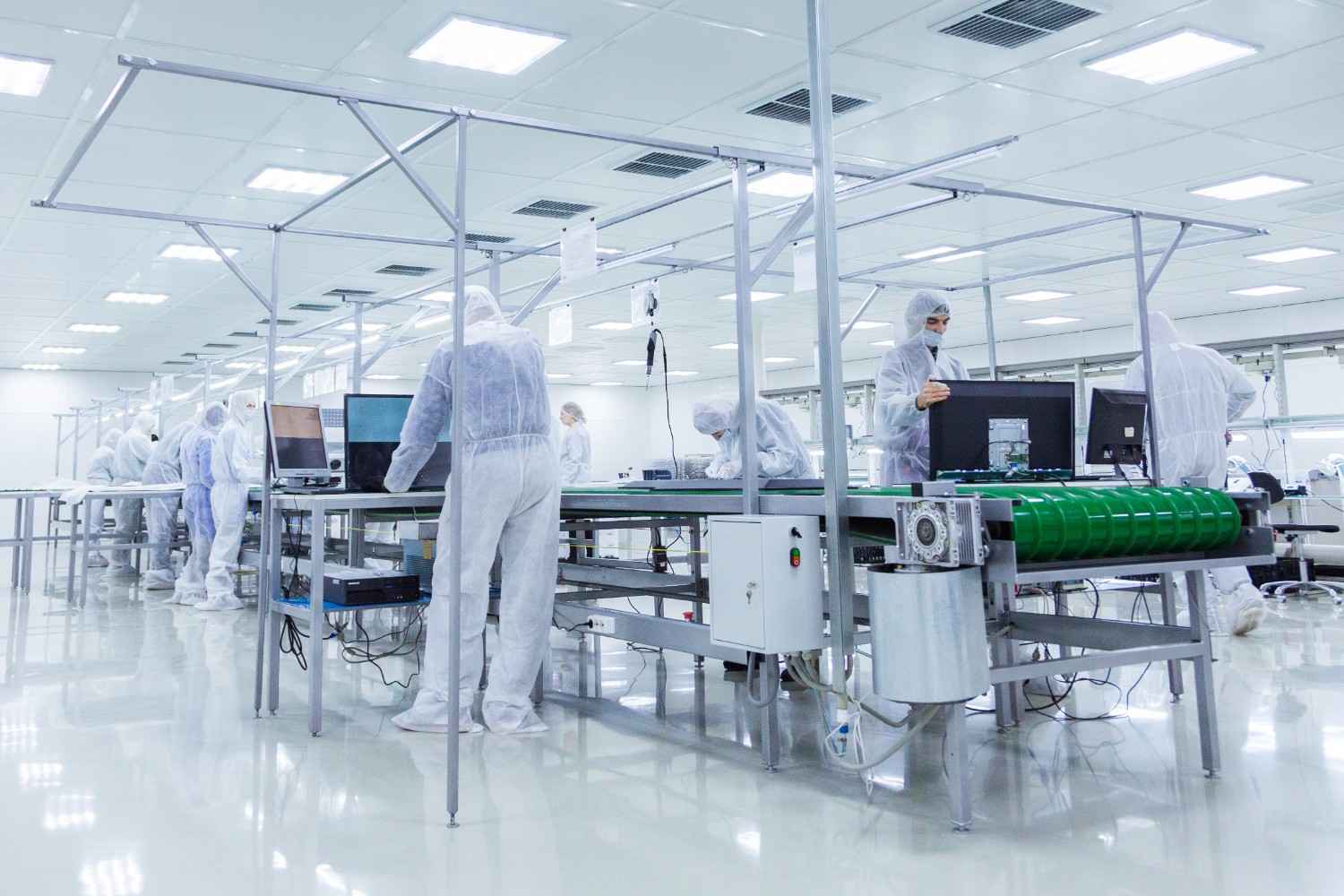
Epoxy Resin Flooring
Best for:
- General clean rooms (ISO 5–8)
- Packaging areas
- Labs, R&D rooms
- Dry processing zones
- Controlled environments without thermal stress
Benefits:
- Higher compressive strength
- Better adhesion
- Superior chemical resistance
- Easily installed in thin coats
- Lower cost than PU
PU (Polyurethane) Flooring
Best for:
- Washdown rooms
- Wet process areas
- Autoclave loading zones
- Cold storage with thermal cycling
- Areas requiring thermal shock resistance
Benefits:
- Withstands aggressive cleaning
- Resists rapid temperature changes
- Excellent microbial resistance
Which Is Better for Clean Rooms?
For most clean rooms, epoxy is preferred due to its superior smoothness and compatibility with conductive systems. PU is used selectively in areas exposed to heat, water, or mechanical shock.
A combined system (PU mortar base + epoxy topcoat) is sometimes used for hybrid performance.
5. Anti-Static (ESD) Flooring in Clean Room Environments
Static electricity poses several risks in pharma and biotech operations:
- It attracts airborne particles, impacting environmental monitoring.
- It can damage sensitive electronic testing equipment.
- It may ignite solvent vapours or fine powders.
- It interferes with automated packaging lines.
For these reasons, many clean rooms are used. Specifically, Grade C/D rooms involving weighing, microelectronics, or powder handling use ESD epoxy flooring.
5.1 Types of ESD Flooring
There are two main categories:
Conductive Flooring
Surface resistance: 10⁴ – 10⁶ ohms
Used for solvent-handling, explosive environments, and sensitive electronics.
Dissipative Flooring
Surface resistance: 10⁶ – 10⁹ ohms
Suitable for general clean rooms and electronics assembly.
5.2 Structure of ESD Epoxy Flooring
A quality ESD epoxy system includes:
- Primer – Ensures adhesion
- Conductive Layer – Carbon-loaded or metal-infused layer
- Topcoat – ESD epoxy resin with static-dissipative properties
- Grounding System – Copper tape linked to earth points
Without proper grounding, even the best ESD flooring cannot perform correctly.
5.3 Why ESD Epoxy Is Preferred Over Vinyl or Rubber
- It is seamless and joint-free
- Does not generate particles
- More chemically resistant
- More durable under heavy traffic
- Lower lifecycle cost
ESD epoxy aligns with ISO 14644 requirements and withstands constant cleanroom cleaning cycles, making it the safest choice for regulated environments.
6. How to Clean Anti-Static Floors (Step-by-Step Guide)
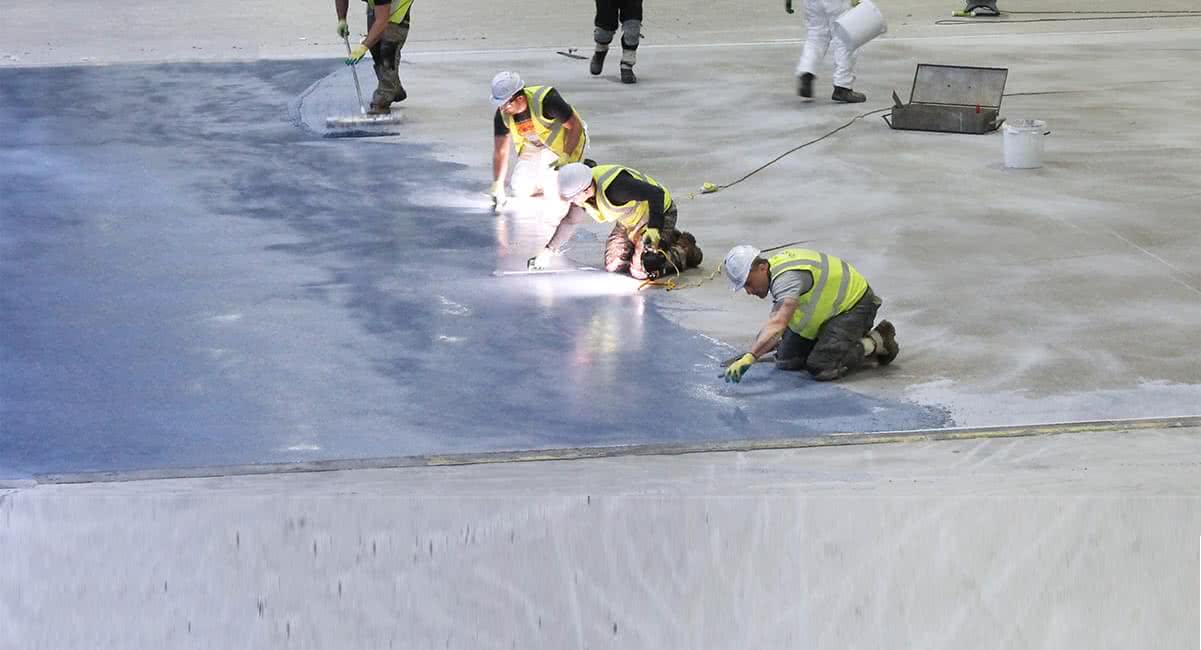
Cleaning anti-static flooring must be done carefully to preserve its conductivity. Using the wrong chemicals can destroy the ESD properties and cause non-compliance.
Here is a GMP-safe cleaning process.
Step 1: Dry Mop Daily Using Microfiber
Microfiber mops are recommended because they:
- Trap dust and particles
- Do not generate static
- Reduce friction
Avoid cotton mops, which can leave fibers behind.
Step 2: Use Only Neutral-pH Cleaners
The cleaning agent must be:
- Non-ionic
- Free from waxes or acrylic polymers
- pH between 6.5 – 8.0
This prevents residue build-up that interrupts conductive pathways.
Never use:
- Floor polish
- Waxes
- Ammonia
- Degreasers
- Soap-based cleaners
These can create insulating layers.
Step 3: Wet Mop or Scrub Weekly
Use ESD-safe mop heads or automatic scrubbers with soft pads.
Ensure that:
- The water is clean and changed frequently
- The detergent does not leave a film
- Excess water is removed to prevent streaking
Step 4: Use ESD-Safe Cleaning Equipment
All cleaning tools must be static-safe, including:
- ESD-certified trolleys
- Conductive mop handles
- Anti-static buckets
This prevents static discharge during cleaning.
Step 5: Monthly Conductivity Testing
Measure:
- Surface resistance
- Point-to-point resistance
- Resistance-to-ground
If readings deviate from ANSI/ESD S20.20 or IEC 61340 standards, maintenance or recoating may be required.
Step 6: Disinfect Using Clean Room-Safe Chemicals
Many disinfectants are compatible with ESD epoxy flooring:
- 70% IPA
- Hydrogen peroxide
- Chlorine-based disinfectants
- Quats
Important:
Always reduce residue by rinsing with DI water after use.
Summary of How to Clean Anti-Static Floors
For quick reference:
| Cleaning Task | Frequency | Notes |
| Dry mopping | Daily | Use microfiber |
| Wet mopping | 2–3 times weekly | Neutral pH cleaners only |
| Machine scrubbing | Weekly | Soft brushes or pads |
| Disinfection | As per the GMP schedule | Rinse after |
| Conductivity testing | Monthly | Follow ANSI/ESD S20.20 |
Proper cleaning ensures ESD flooring remains compliant, safe, and functional for years.
7. Clean Room Flooring Testing & Validation
Clean room flooring must undergo strict testing during installation, commissioning, and operational qualification (OQ/PQ).
7.1 Mechanical Testing
- Adhesion strength
- Abrasion resistance
- Impact resistance
- Thickness consistency
7.2 Chemical Resistance Testing
Flooring must resist:
- Disinfectants
- Solvents
- Reagents
- Biological waste
Epoxy generally excels in these categories.
7.3 Cleanability & Particle Testing
Includes:
- Particle generation assessment
- Swab tests
- Disinfectant compatibility checks
Flooring must remain stable under repeated cleaning and ensure no particle shedding.
7.4 ESD Performance Testing (If Applicable)
Following:
- ANSI/ESD S20.20
- IEC 61340
- SS 553 (Singapore)
Tests include:
- Surface resistance
- Body voltage generation
- Resistivity-to-ground
ESD epoxy flooring must meet consistent readings to remain certified.
7.5 GMP Documentation
Proper documentation is critical for inspections:
- MSDS
- Test certificates
- Installation records
- IQ/OQ/PQ documentation
- Maintenance logs
Failing to maintain records may result in non-compliance even if the floor performs well.
8. Common Compliance Mistakes in Singapore Clean Rooms
Several recurring issues can compromise flooring performance and GMP compliance:
8.1 Using Tile Flooring with Grout Lines
Tiles are problematic because:
- Grout harbours bacteria & particles
- Tiles can crack under mechanical load
- Moisture can penetrate through joints
Regulators generally prefer seamless flooring.
8.2 Incorrect Slope-to-Drain Design
In wet areas or washdown rooms, poor slope design can cause:
- Water pooling
- Slip hazards
- Microbial growth
8.3 Selecting Flooring Not Resistant to Disinfectants
Some vinyl or rubber floors degrade under strong disinfectants used in GMP environments.
Epoxy has far higher chemical resistance.
8.4 Improper ESD Grounding
ESD epoxy flooring only works when properly grounded.
Common errors include:
- Missing grounding points
- Copper tape not connected to earth
- Damaged grounding wires under machinery
8.5 Using Cleaning Agents That Leave Residue
Wax or polymer-based cleaners block conductivity on anti-static floors.
This is one of the most common reasons for flooring requalification failures.
8.6 Ignoring Environmental Conditions During Installation
Temperature and humidity influence resin flooring installation.
Poor environmental control can lead to:
- Bubbles
- Cracking
- Delamination
Professional installation helps avoid these issues.
9. Conclusion
Clean room flooring is a critical component of Singapore’s pharmaceutical and biotechnology infrastructure. Whether you operate an ISO 8 processing room, an ISO 5 sterile suite, or an R&D lab, choosing the right flooring system ensures:
- GMP compliance
- Long-term durability
- Contamination control
- Safety for personnel and equipment
- Stable and predictable performance during audits
Clean room epoxy flooring remains the material of choice for most clean rooms due to its seamlessness, chemical resistance, and ability to integrate with ESD systems.
At the same time, knowing how to clean anti-static floors properly helps preserve conductivity, prevent audit failures, and extend the flooring lifespan.
Asset Protection Services provides fully compliant flooring solutions designed to meet Singapore’s strict pharmaceutical and biotech standards — from epoxy to PU and specialised ESD systems.


